About Chemical Dosing Systems
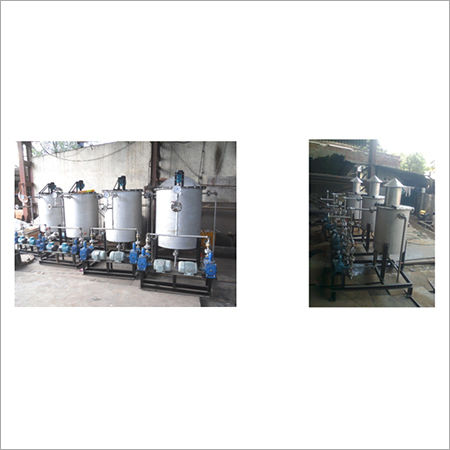
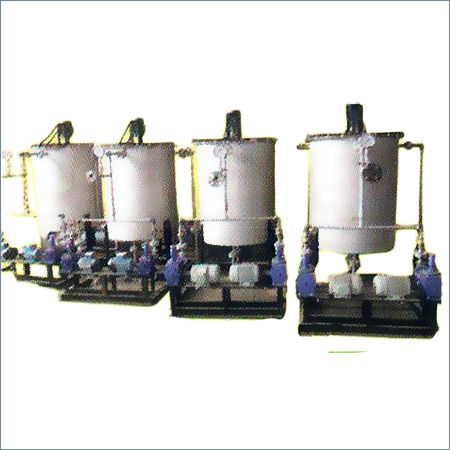
Being a leading firm in this domain, we have been engaged in manufacturing and exporting premium quality Chemical Dosing Systems. These systems are used for automated injection of reagents into wastewater network for control of septicity and odor emissions. Provided systems find their applications in pump stations, sewer manholes, and other related places. The offered system is ideal for feeding chemicals to stepwise adjustment of doses until a desired level of effect is reached. Moreover, provided Chemical Dosing Systems are known for their robustness.
Key points:
- Longer life
- Corrosion resistant surface
- User-friendly design
Price And Quantity
- Minimum Order Quantity
- 1
- Unit of Measure
- Unit/Units
- Price
- Price Range
- 150000.00 - 1200000.00 INR
Trade Information
- Payment Terms
- Others, Days after Acceptance (DA), Cash in Advance (CID), Cash Against Delivery (CAD)
- Supply Ability
- 5-6 Per Year
- Delivery Time
- 45-60 Days
- Sample Available
- Yes
- Sample Policy
- Contact us for information regarding our sample policy
- Main Export Market(s)
- Africa, Middle East, Western Europe, Eastern Europe, South America, North America, Central America, Australia, Asia
- Main Domestic Market
- All India
Advanced Dosing Accuracy and ControlOur chemical dosing systems leverage microprocessor or PLC-based technology for precision measurement and delivery, with flow rates adjustable from 0.1 to 5000 LPH. Choose manual or automatic operation per application needs and rely on digital panel displays for real-time monitoring. Integrated calibration cylinders ensure ongoing dosing accuracy while audio and visual alarms safeguard against faults, guaranteeing reliable and repeatable performance across diverse industrial settings.
Durable Design with Enhanced SafetyConstructed from corrosion-resistant FRP, MS, or SS materials, these systems are built to withstand aggressive environments and multiple water types. Enclosures rated IP55/IP65 protect sensitive electronics, while our tanks feature high/low level indication for continuous system surveillance. Accessories like pressure relief valves and pulsation dampeners further enhance operational safety, making maintenance and troubleshooting straightforward and secure.
Flexible Configuration & Comprehensive SupportWith configurable tank numbers and mixing options (static or mechanical stirrer), our systems are tailored for various use cases. Floor or skid-mounted installation allows for seamless integration into new or existing facilities. Our service includes on-site installation, training, and responsive support, ensuring users can maximize efficiency and maintain compliance with CE and ISO standards for process and environmental safety.
FAQs of Chemical Dosing Systems:
Q: How does the chemical dosing system maintain dosing accuracy during operation?
A: The system utilizes high-precision pumps, integrated calibration cylinders, and digital control panels to monitor and adjust chemical injection rates, ensuring dosing remains within a 2% accuracy range regardless of flow requirements or operating conditions.
Q: What are the recommended procedures for calibrating the dosing system?
A: Calibration can be performed using the integrated calibration cylinder. The digital panel guides users through the process, allowing precise adjustment and verification of dosing quantities to maintain optimal accuracy and system efficiency.
Q: When should mixing type (static or mechanical stirrer) be selected for chemical tanks?
A: Static mixers are ideal for homogeneous solutions with low viscosity, while mechanical stirrers are suited for more complex or viscous chemicals. Selection depends on chemical properties and process needs for optimum mixing and dosing performance.
Q: Where can these chemical dosing systems be installed?
A: Designed for industrial and effluent treatment applications, the systems can be floor-mounted or skid-mounted in process industries, water treatment plants, cooling towers, and boiler facilities. Robust enclosure ratings support ambient temperatures between 5C to 55C, ensuring versatility and reliability across diverse settings.
Q: What is the process for responding to system alarms or faults?
A: Audio and visual alarms promptly alert operators to faults or abnormal conditions. Upon notification, users should consult the digital panel for diagnostic information, inspect system components (such as valves and pumps), and follow maintenance recommendations to restore normal operation.
Q: How does using this dosing system benefit overall plant efficiency and safety?
A: Precise chemical dosing improves process reliability and product quality while reducing waste and operational risks. The systems corrosion-resistant design, efficient energy consumption (0.52 kW), and integrated safety features help safeguard personnel and equipment, supporting uninterrupted, high-purity production environments.





 Send Inquiry


 Send Inquiry